Where to Dance Salsa & Bachata in Tokyo
Tokyo has one of Asia's most active and surprising Latin dance scenes — built by passionate local dancers who discovered salsa and bachata in the 1990s and never looked back. Nightly socials run across six-plus dedicated venues in Roppongi, Shinjuku, Nippori, and Ginza, with most wrapping by 23:30 so dancers can catch the last train. The city also hosts BMJ Sensual Festival, one of Asia's biggest bachata congresses.
6+
dedicated Latin dance venues
17
weekly salsa socials tracked (June 2026)
7
nights a week with active dancing
Roppongi
Tokyo's foreigner-friendly hub — two Latin venues, walkableRoppongi is where Tokyo's Latin dance scene is most visible to visitors. El Café Latino and Studio Pepe are both within a short walk of Roppongi Station, offering nightly class-to-social programs. The most international-friendly area in the city and the natural first stop for visiting dancers.
The most famous Latin venue in Tokyo — a 4-minute walk from Roppongi Station. Two levels often split between bachata and salsa. Multiple styles taught nightly (On1, On2, Cuban, Colombian), making it versatile for any level. Busy every night of the week.
Studio Pepe (PEPE2)
📍 B1F Business Apartments, 7-17-12 Roppongi, Minato-ku, TokyoOne of the most respected dance studios in Tokyo with a strong community of advanced local dancers and regular guest instructors. Proper sprung dance floor, calm atmosphere with a bar counter. Wraps up in time for the last train. 2-minute walk from Roppongi Station (Hibiya Line).
Shinjuku
Kabukicho energy meets salsa basementShinjuku has two contrasting options: Latin Club Leon, a basement institution near Shinjuku Sanchome open since the 1990s with resident instructors and a Peruvian food menu, and Fiesta Latin Spot Bar in Kabukicho for a mid-week BachaSalsa social.
Shinjuku's longest-running salsa basement — open since the 1990s, underground near Hanazono Shrine. Serves a full Peruvian menu. Resident instructors include Colombian and Cuban specialists; staff speak Japanese, Spanish, and some English. 3-minute walk from Shinjuku Sanchome Station.
Fiesta Latin Spot Bar
📍 Dai-21 Tokyo Building 3F, 1-14-6 Kabukicho, Shinjuku-ku, Tokyo 160-0021No formal lesson — pure social dancing on Wednesday nights. DJ Mako-san runs a 50/50 bachata/salsa rotation in a relaxed format. Located in Kabukicho, Tokyo's entertainment heartland. Check fiesta-latinspotbar.com or Facebook @fiesta.shinjuku for the current schedule.
Nippori
30 seconds from the station — every style under one roofOff the usual tourist trail but beloved by Tokyo's regular dance community, Latin Bar Salud is the city's most eclectic venue — running Cuban salsa, On1, On2, bachata, and zouk across the week. A 30-second walk from JR Nippori Station makes it one of the most reachable venues in the city.
The most style-diverse Latin venue in Tokyo — unique for running Cuban salsa, NY-style, bachata, and zouk across different nights of the week. Beloved for its mojito cocktail bar and laid-back atmosphere. Elevator to 3F. 30-second walk from JR Nippori Station East Exit.
Ginza & Nihonbashi
Central Tokyo — old-school Latin bars, after-work dancingCentral Tokyo's financial district is home to two of the city's most established Latin venues: Las Risas in Ginza (one of the oldest salsa bars in Tokyo) and Studio JBA in Nihonbashi, a basement studio running nightly class-to-social programs.
Las Risas Latin Bar
📍 Onosato Onosho Building B1F, 8-12-6 Ginza, Chuo-ku, Tokyo 104-0061One of the oldest Latin bars in Tokyo — a Ginza institution tucked in a basement below the luxury district. Lessons included every night before the social, making it beginner-friendly. Intimate, low-lit space with a polished atmosphere. Near Shimbashi or Higashi-Ginza stations.
Studio JBA Nihonbashi
📍 HAT Bldg B1F, 11-8 Nihonbashiodenmacho, Chuo-ku, Tokyo 103-0011Mirror-lined basement studio in the Nihonbashi business district, one of Tokyo's most reliable nightly hubs for salsa and bachata. The 7 PM beginner class is a great entry point for visiting dancers. Occasionally hosts live percussion nights. Near Nihonbashi or Shin-Nihonbashi stations.
Tips for visitors
- 🚇Last train is your curfew — or your commitment. Tokyo's metro shuts down around midnight–00:30 AM (varies by line). Most Latin venues wrap by 23:30 so you can make it. If you miss the last train, the next one runs around 05:00 AM.
- 🪙Get a Suica or PASMO IC card at the airport and load it with ¥2,000–¥3,000. Tap in and out of every train and subway — it works on all lines. Foreign visitors can get a "Welcome Suica" at Narita or Haneda (28 days, no deposit).
- 💴Bring cash to the door. Most Latin venues are cash-only for entry (¥1,000–¥3,000, usually includes a drink). 7-Eleven, Lawson, and FamilyMart ATMs accept foreign cards 24/7.
- 📅Best nights: Friday and Saturday everywhere; Sunday at El Café Latino and Studio Pepe; Wednesday is the strongest mid-week night (Fiesta Spot Bar + classes at most venues).
- 🌍The scene is welcoming but mostly Japanese-speaking. Roppongi venues have the most English. On the dance floor: a bow and "arigato" after each dance is good etiquette — bring a spare shirt, as cleanliness is taken seriously.
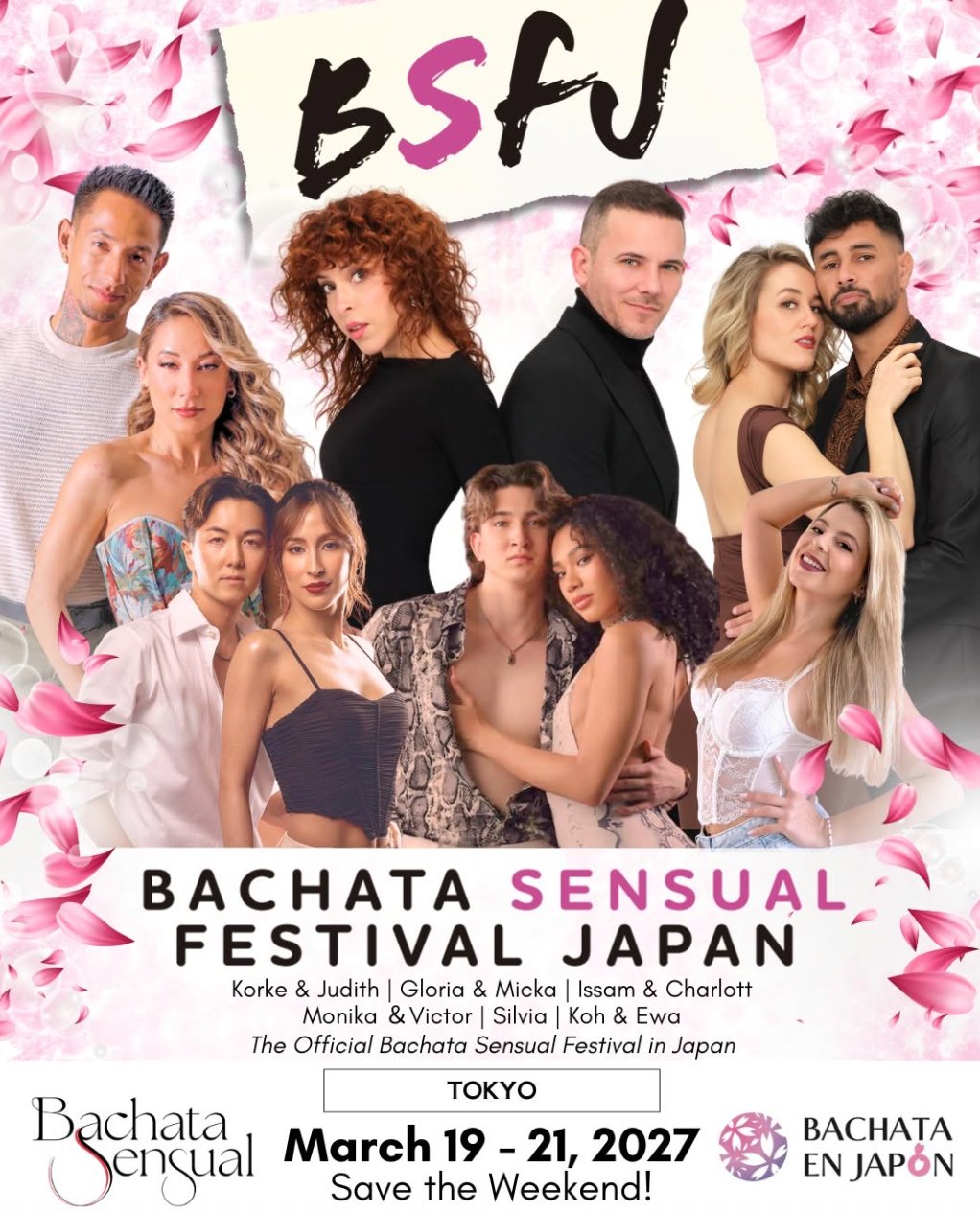
Upcoming festivals in Tokyo
Beyond the weekly socials, Tokyo hosts several multi-day festivals each year.
Traveling beyond Tokyo?
Find festivals around the world
Browse 380+ salsa, bachata, kizomba and zouk festivals across 55+ countries — from Europe to Asia to Latin America.
Browse all festivals